These are notes for me as a breastfeeding mother. This is not a challenge to those who don't breastfeed, I'm just sharing some of the reassurrance that I got from reading it - I found it interesting, you might too.
After
finding out that the chances of Thomas catching chicken pox off Abbie
were lower as a result of me breastfeeding him, I was pretty chuffed (see chicken pox blog). It
isn't to say he won't contract it. Just made me jump a little inside
out of celebration for the amazingness of breastmilk! I did also wonder
about what the other benefits were to the immune system - if it could do
this, what else could it do?
I checked out the
Cochrane review database,
where tightly controlled reviews are made of all scientific research
over a period of time to find out the answer to a particular question.
If you ever get frustrated that one article comes out saying one thing,
later another says to do completely the opposite, these reviews take all
the studies together, say over a 20 year period, and deliver the most up to date answers. I found
this
review by Renfrew et al., (2012),
where the background more than covers the benefits of breastfeeding:
"Breastfeeding has a fundamental impact on the short-, medium- and
long-term health of children and has an important impact on women’s
health. Good quality evidence demonstrates that in both low- and
high-income settings not breastfeeding
contributes to infant mortality, hospitalisation for preventable disease
such as gastroenteritis and respiratory disease, increased rates of
childhood diabetes and obesity...Few health behaviours have such a broad-spectrum and long-lasting impact
on population health, with the potential to improve life chances,
health and wellbeing...The established negative impact on a population of not breastfeeding has
resulted in global and national support for encouraging the initiation
and continuation of breastfeeding. The World Health Organization (WHO)
recommends that, wherever possible, infants should be fed exclusively on
breast milk until six months of age (WHO 2003), with breastfeeding continuing as an important part of the infant’s diet till at least two years of age." (Note: For an idea of what this means in terms of how much feeding occurs as babies grow, see bottom of this blog)
Interestingly, it also
highlights the issues of incorrect guidance from health professionals, something that has been advised to stop
since 1991
and it is still happening!:
"In few settings is standard care offered by professionals with an
in-depth understanding of the prevention and treatment of breastfeeding
problems. To address this, UNICEF and the WHO established the global
Baby Friendly Hospital Initiative (Baby Friendly Initiative in some
countries) in 1991 to train health professionals and remove
inappropriate routines such as supplementary feeding and restrictions on
feeding times. Over 15,000 facilities in 134 countries have been accredited (UNICEF 2011), but most babies are still not born in a Baby Friendly environment"
I took in the advice
of midwives, health visitors etc when my daughter was born, and some of
it did conflict. It's taken time for me to learn to take their advice with a
pinch of salt, to trust my own instincts on what's right, as well as to
seek accurate advice from other sources. Although I am doing this now, I
think that it is a concern that we cannot rely on advice from such
people, at times when we could be quite vulnerable and need good
advice.
Being able to make informed decisions (based on the truth) about how and whether or not we breastfeed is so important, to us and most likely to the NHS itself! This is particularly the case where incorrect guidance on positioning/attachment or how to feed on demand may lead someone to incorrectly believe that they/their baby are physically unable to breastfeed when they had instead been let down by inappropriate guidance, and perhaps be put off from trying again in the future. This surely goes beyond feeding decisions too. Give us the facts and appropriate support!
 Just to be clear, I am not a signed up breastfeeding mafia member (if that exists...I suspect not! What is it anyway?). I believe in what I'm doing, but understand that it may not be physically or practically possible, or a priority for everybody (the problems some have in establishing breastfeeding in particular is something I realise more now than I did in the past). Who knows, I may not manage it or want to next time around. Lives change.
Although I support breastfeeding and it's benefits, I realise that it is an element of allsorts of positive contributions we can make to our children's lives. I'm sure I've got deficits in other areas (my husband says I should get out more when I talk to him about how seriously I take these subjects at times and I probably should!).
However, I would like to find a way to bring up breastfeeding without it being assumed that I am challenging anyone who hasn't breastfed their baby - the two seem linked when I wish they weren't. I do not believe that there is any debate to be had if we stick to the facts so do not have much interest in it anyway. But just bringing up the subject seems to invite the debate all over again...sigh. Despite my convictions, I also don't want to hurt anyone's feelings, and it is very difficult in general when talking about such a volatile subject as parenting. Balancing my writing sensitively is something I aim for, and always try to improve on.
In sum, the chicken pox enlightenment moment was something that I simply found pretty cool and I just wanted to share it. That's all. I hope that I can keep sharing the things that I find, just to get them out there. (For my nerves' sake I think I'll avoid mentioning it for a while, as this has been quite a challenging process).
STOP PRESS: We're at the end of the incubation period and Thomas did not contract chicken pox.
Just to be clear, I am not a signed up breastfeeding mafia member (if that exists...I suspect not! What is it anyway?). I believe in what I'm doing, but understand that it may not be physically or practically possible, or a priority for everybody (the problems some have in establishing breastfeeding in particular is something I realise more now than I did in the past). Who knows, I may not manage it or want to next time around. Lives change.
Although I support breastfeeding and it's benefits, I realise that it is an element of allsorts of positive contributions we can make to our children's lives. I'm sure I've got deficits in other areas (my husband says I should get out more when I talk to him about how seriously I take these subjects at times and I probably should!).
However, I would like to find a way to bring up breastfeeding without it being assumed that I am challenging anyone who hasn't breastfed their baby - the two seem linked when I wish they weren't. I do not believe that there is any debate to be had if we stick to the facts so do not have much interest in it anyway. But just bringing up the subject seems to invite the debate all over again...sigh. Despite my convictions, I also don't want to hurt anyone's feelings, and it is very difficult in general when talking about such a volatile subject as parenting. Balancing my writing sensitively is something I aim for, and always try to improve on.
In sum, the chicken pox enlightenment moment was something that I simply found pretty cool and I just wanted to share it. That's all. I hope that I can keep sharing the things that I find, just to get them out there. (For my nerves' sake I think I'll avoid mentioning it for a while, as this has been quite a challenging process).
STOP PRESS: We're at the end of the incubation period and Thomas did not contract chicken pox.
Conclusions about best way to support breastfeeding - from the review:
" All
women should be offered support to breastfeed their babies to increase
the duration and exclusivity of breastfeeding. Healthcare settings
should provide such trained support as standard. Support is likely to be
more effective in settings with high initiation rates, so efforts to
increase the uptake of breastfeeding should be in place. Support may be
offered either by professional or lay/peer supporters, or a combination
of both. Strategies that rely mainly on face-to-face support are more
likely to succeed. Support that is only offered when women seek help is
unlikely to be effective; women should be offered ongoing visits on a
scheduled basis so they can predict that support will be
available. Support should be tailored to the setting and the needs of
the population group."
*Frequency of feeds reduce over time!
Just in case anyone is wondering how often you feed your baby, and how this frequency changes beyond newborn time, here's what happened with me:
- As a newborn, Abbie fed sometimes every 20 mins, sometimes either side of some bigger naps/playful waking times (1/2/3 hours - even longer at night, Thomas is currently every 4/5 hours at 7 wks). This depends on things like growth spurts - where feeding becomes more frequent over a 36 hour period - and weather: breastmilk quenches thirst as well as sorting out hunger (fore/hind milk) so in hot weather, babies drink more. As their tummies get bigger they can cope with bigger feeds over longer stretches. Feeding on demand, they'll organise their feeding so sufficient, so it isn't a worry.
- By 6 months we started Abbie on solids, although at this time it's about tasting and learning about how to eat the foods, while the milk provides their nutrition, she tended to need feeding about 4 or 5 times a day.
- When I went back to work (9 months old), she had water at nursery, as I never cracked expressing, so had 3 feeds a day: at wake up, after nursery if hungry, and then before bed (around 7pm).
- By 1 year old, when cow's milk ok as replacement (although breastfeeding not purely nutritional act so not a straight swap, and weaning does take time) I adopted the "don't offer, don't refuse strategy" and usually fed her twice a day unless requested more, until she weaned herself off (about 14 months old).



 Just to be clear, I am not a signed up breastfeeding mafia member (if that exists...I suspect not! What is it anyway?). I believe in what I'm doing, but understand that it may not be physically or practically possible, or a priority for everybody (the problems some have in establishing breastfeeding in particular is something I realise more now than I did in the past). Who knows, I may not manage it or want to next time around. Lives change.
 I am one of three sisters
 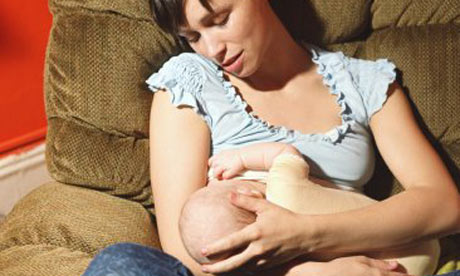 I have avoided talking about my opinions about breastfeeding this far, firstly, because of not wanting to offend or upset anybody who hasn't breastfed, particularly friends and members of my family, who I know think and feel very deeply about their choices and their children. The other is a cowardly reason: because I don't want to receive the backlash I've seen elsewhere towards those who support breastfeeding, being described as "middle class do-gooders" and the like.
